|
Releases |
Title screen |
1½ extra seconds |
Ouch |
Mushroom House wait |
World 1-Fortress |
King's chamber |
Change of suit |
Treasure Ship |
Jugem's Cloud |
Tanooki Suit |
Letters from the Princess |
World 3-Japan |
World 5-1 |
Kuribo's Shoe |
World 6-Mushroom House #1 |
World 8-Battleships |
No joke |
Credits |
28 P-Wings bonus |
Names
ReleasesThe two versions compared on this page are the following:
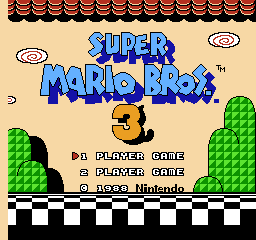
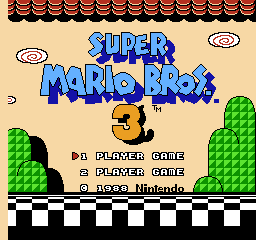
Title screenThe trademark symbol was moved down to the "3" in the title logo.
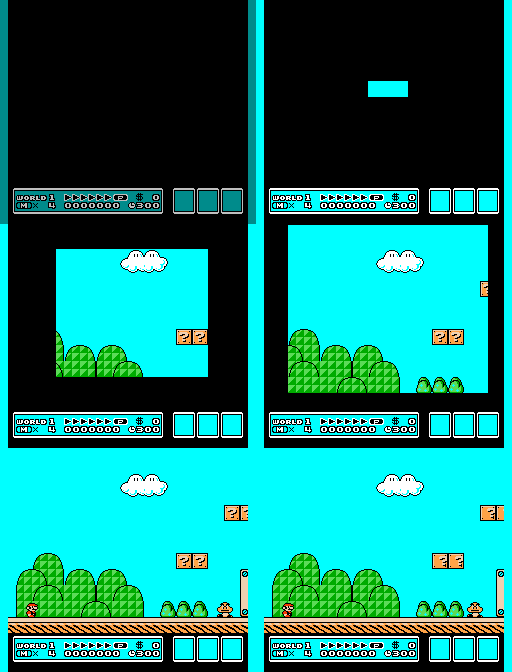
1½ extra secondsSuper Mario Bros. 3 has an iris-out effect when you start a level from the map screen. It is no different in the Japanese version, except that it has an iris-in effect before the level starts. Below is an animation for your viewing convenience.
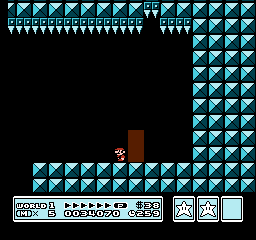
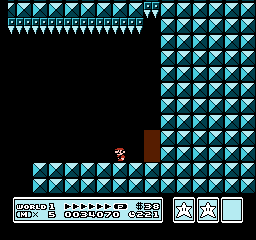
Animated GIF by CPU3X. This effect was omitted in the U.S. version, reducing the wait time by about 1½ seconds. OuchIn the Japanese SMB3, Super/Fiery/Raccoon/Frog/Tanooki/Hammer Mario all will revert to small Mario after taking damage. The U.S. version is more lenient, allowing a damaged Fiery/Raccoon/Frog/Tanooki/Hammer Mario to regress only one step to Super Mario. Mushroom House waitThe Japanese version lets you move before Toad is done talking, but the U.S. version makes you wait until all the text has appeared. If they didn't change the wait time in the U.S. version, you would be able to move right after the second line of text finished. World 1-FortressThe rising-and-falling spiked ceiling originally had a few more spikes at the very end. In the U.S. version, the door was moved one block to the right to be underneath the higher ceiling, and the wall on the right was extended two blocks to the left, deleting the spikes. These changes probably made this section easier for most players.
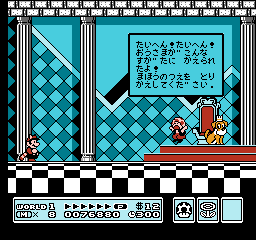
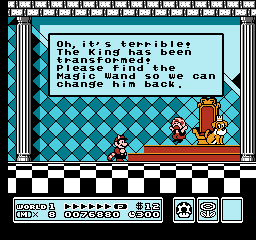
Thanks: Rebeka Thomas. King's chamberWhen we find out the king has been transformed, we also see that his room is a bit different. In the U.S. version, Mario starts out closer to the steps, one column is missing, the stairs were lengthened, and the column on the right side of the screen is now in front of the steps. Also, the throne and stair trim were changed from cyan to gold, resulting in a slightly more colorful room. As for the background, the columns' shadows switched directions, and the huge upside-down triangles changed in color and size.
You might recall that Super Mario All-Stars used the original throne room from the Japanese version. Mario even starts out on the left there, too. Change of suitIn the Japanese SMB3, when Frog/Tanooki/Hammer Mario takes damage, you'll hear a "bloop" sound as an outline of the suit leaves Mario's body. We didn't get to see the suit fly off in the U.S. SMB3, but the effect returned in Super Mario All-Stars.
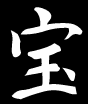
Treasure ShipThere is a trick you can do that will turn a Wandering Hammer Brother on the map screen into a Treasure Ship. If you've ever done it, you may have noticed a weird symbol on the ship's sail. Believe it or not, it is the kanji character for "treasure." (Kanji are Chinese characters used in Japanese writing.)
Jugem's CloudThe Jugem's Cloud item lets Mario skip over one stage on the map screen. In Japan, Lakitu is called "Jugem." Lakitu rides in a cloud similar to this one, hence the name "Jugem's Cloud."
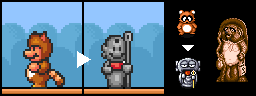
Tanooki SuitMario's transformations into Raccoon and Tanooki Mario are actually based on Japanese mythology. A "tanooki" (really spelled tanuki) is a raccoon-like animal indigenous to Japan. In ancient Japanese tales, raccoons had quite a bit of magic power. One of their most renowned talents was the ability to shift their shapes by using leaves. They often used this to turn into humans. Other creatures, such as foxes, were also known to have these powers, but whereas foxes used this ability to often play cruel tricks on humans, raccoons were more of a nice and helpful nature. Large raccoon statues are also used in Japan as some kind of good-luck bringers. Thanks: Toasty64, Xanatøs
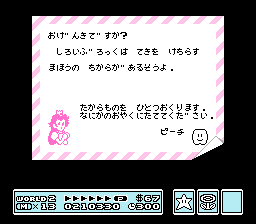
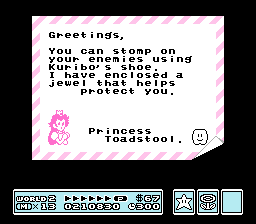
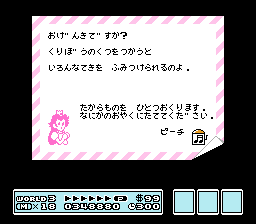
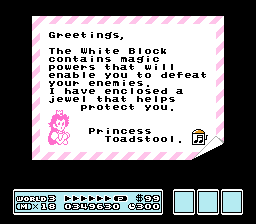
On the far right is a tanuki from The Legend of the Mystical Ninja (SNES), and to the left of that we see Rocky's transformation from Pocky and Rocky (SNES). Letters from the PrincessThe letters that Princess Toadstool sends at the end of Worlds 2 and 3 were switched. In the Japanese version, Princess told you about the White Block after World 2, and Kuribo's Shoe after World 3. The gifts that she enclosed stayed the same, however. World 2:
World 3:
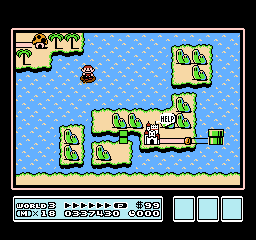
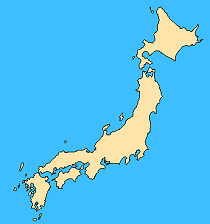
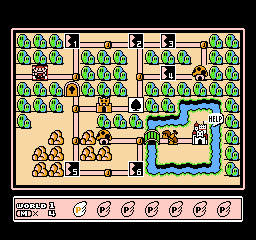
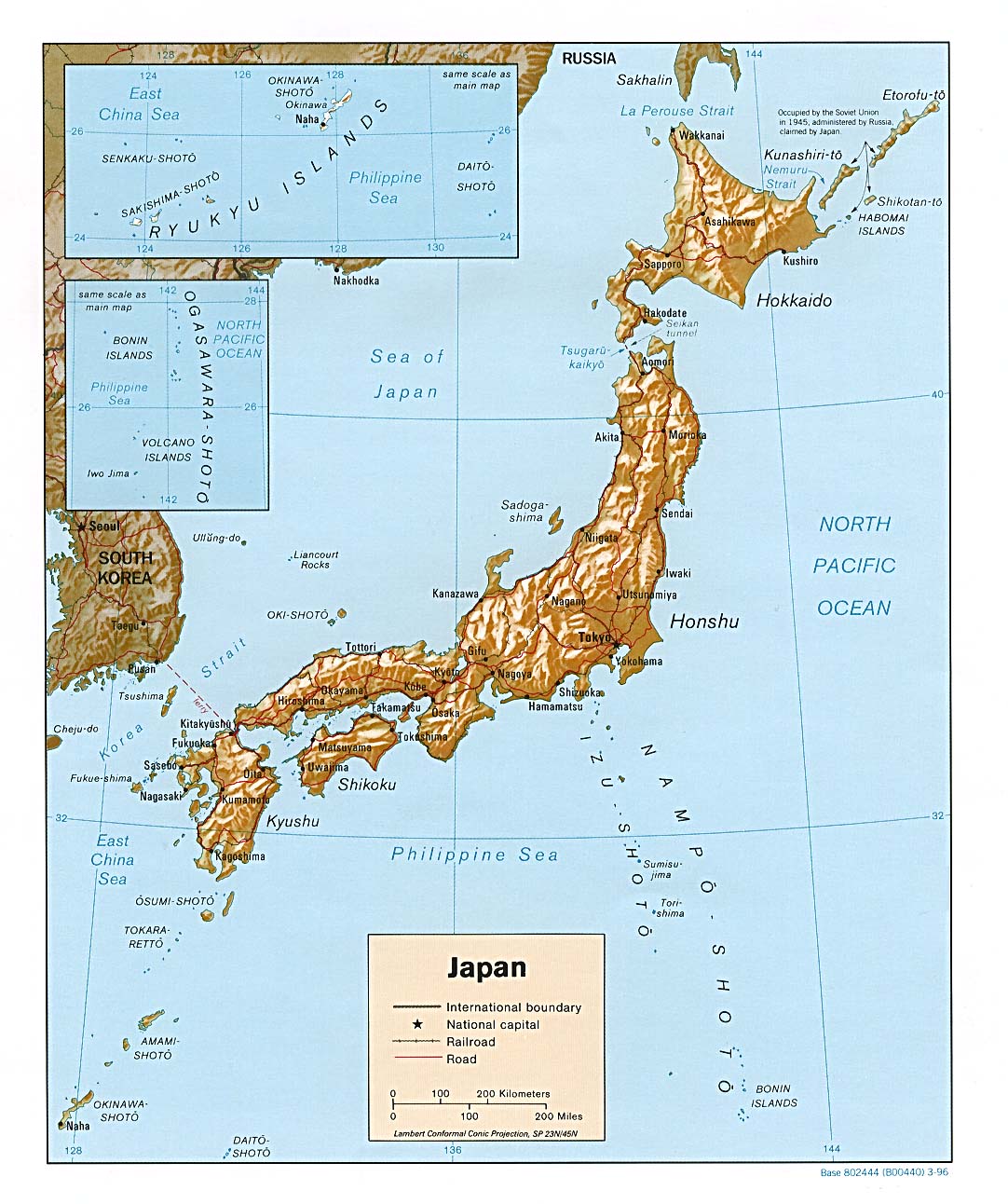
(Note: In a revised version of SMB3 released in the U.S., "Kuribo's shoe" was changed to "Goomba's shoe.") World 3-JapanOn the World 3 map screen, if you take Mario on a canoe ride to the castle, you'll pass a mushroom-shaped island on the way. The island where the castle is located also has a familiar shape: the country of Japan.
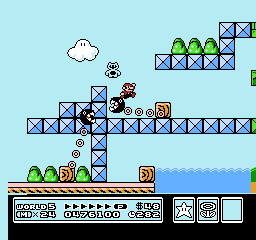
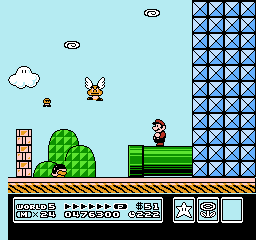
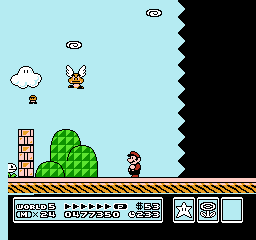
Incidentally, the castle would be in the city of Kyoto -- the location of Nintendo's headquarters. Now remember that the king of World 3 looks like Mario (Nintendo's mascot), and everything falls into place. Thanks: Imara and Chilly the Snowman World 5-1World 5-1 is a little longer in the Japanese version. After the Para-Goomba, there's a wall with a pipe attached that leads to the goal. When you emerge from the pipe on the other side, you'll have a wall on your left and 16 blocks of vacant terrain between the pipe and goal area. This ending was shortened in the U.S. version, as the goal area was moved to where the wall used to be.
The wall was removed to fix an odd, harmless glitch that would happen if you were to fly over the wall after going through the pipe. See the SMB3 bugs page for more details. One more change occurred here: The Buster Beetle (seen in the Japanese screenshot above) was removed. Kuribo's ShoeNeat item, but who is Kuribo? The answer is simple: In Japan, the name for a Goomba is "Kuribo." Thus, the English equivalent would be "Goomba's Shoe."
In the Japanese version, if you run into an enemy, the shoe turns red as you lose it. Another difference is that Mario will take damage while losing the shoe; small Mario will survive, but Super/Fiery/Raccoon/Frog/Tanooki Mario will come out small. If you lose the shoe while wearing the Frog or Tanooki Suit, you'll only see the suit fly off (see "Change of suit" above).
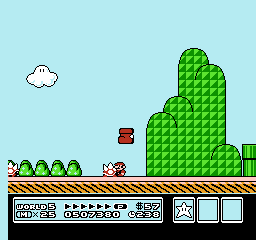
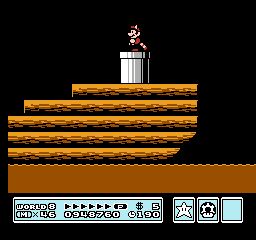
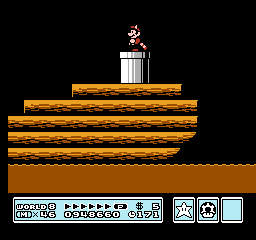
World 6-Mushroom House #1The first Mushroom House in World 6 gives you different items in each version. You'll get a Hammer Suit in the Japanese game, but you can only get a randomly-chosen Super Mushroom, Fire Flower, or Super Leaf in the U.S. version. World 8-BattleshipsIn the second "level" of World 8, one block was removed from the end of the last ship.
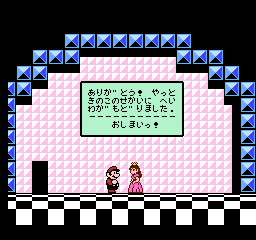
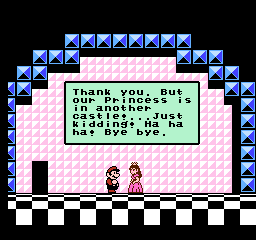
Mario hops from ship to ship over what appears to be hot lava, but the mystery liquid is actually safe to swim through. In the Japanese version, if Mario were to swim under or jump off the last ship, the back end is too high for anyone except Frog Mario to jump back up. Furthermore, since this is an auto-scrolling level, Mario cannot swim back to the left, because at this point the level has stopped scrolling. The block was removed to fix this problem. No jokeThe Japanese SMB3 features a more serious Princess Toadstool. In the Japanese version, Princess Toadstool originally said, "Thank you! Finally, peace returns to the Mushroom World. The end!"
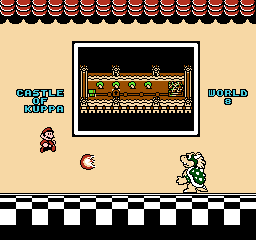
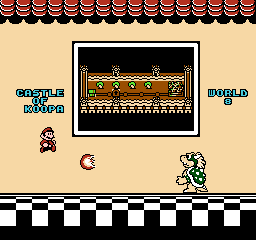
CreditsIn the end credits, World 8's name was changed from "Castle of Kuppa" to "Castle of Koopa." ("Kuppa" is Bowser's Japanese name.)
Note: When SMB3 was re-released in the U.S., the world names were all changed to "Something Land." See the SMB3 info page for more details. 28 P-Wings bonusWhen the curtain comes down and "The End" appears, it really is the end in the Japanese version. If you wanted to start a new game, you'd have to reset the system. However, a really neat bonus was added for the U.S. version. After the end credits, you can press Start to go back to the title screen, and you'll start a new game with 28 P-Wings in your inventory!
NamesUnless otherwise noted, all names in the following tables are from the Japanese and English manuals. Battle Game
Blocks
Characters
Enemies
Items
Lifts
Mario's forms
Special thanks to JJ for providing the Japanese manual!
Contributing: Jonathan Miller.
Releases |
Title screen |
1½ extra seconds |
Ouch |
Mushroom House wait |
World 1-Fortress |
King's chamber |
Change of suit |
Treasure Ship |
Jugem's Cloud |
Tanooki Suit |
Letters from the Princess |
World 3-Japan |
World 5-1 |
Kuribo's Shoe |
World 6-Mushroom House #1 |
World 8-Battleships |
No joke |
Credits |
28 P-Wings bonus |
Names
| ||||||||||||||||||||||||||||||||||||||||||||||||||||||||||||||||||||||||||||||||||||||||||||||||||||||||||||||||||||||||||||||||||||||||||||||||||||||||||||||||||||||||||||||||||||||||||||||||||||||||||||||||||||||||||||||||||||||||||||||||||||||||||||||||||||||||||||||||||||||||||||||||||||||||||||||||||||||||||||||||||||||||||||||||||||||||||||||||||||||||

Copyright © 1997-2026 TheMushroomKingdom.net
 Database last modified: Tuesday, 17-Jun-2025 17:35:33 CDT